Currently, the Omicron variant is spreading across the United States like wildfire.
On January 3rd, the U.S. recorded a record-breaking one million new infections in a single day. A week later, on January 10th, the daily new confirmed cases of COVID-19 in the U.S. approached 1.5 million, setting another record.
Dr. Anthony Fauci, a top infectious disease expert in the U.S., issued a warning on January 11th, stating that at the current rate of spread, the Omicron variant will eventually find "virtually everybody."
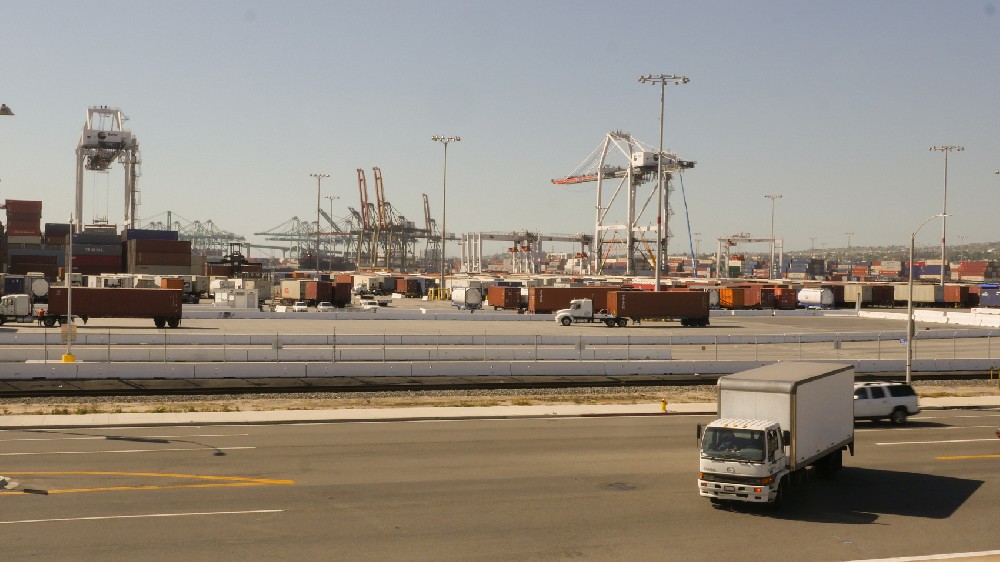
The two major West Coast ports, Los Angeles and Long Beach, are in complete disarray under the onslaught of the pandemic, despite handling 40% of the U.S. imports. Jim McKenna, the Executive Director of the Pacific Maritime Association (PMA), stated that on January 4th, about 150 dockworkers in West Coast ports underwent COVID-19 tests, with approximately 100 testing positive. He warned that the next two weeks would be "terrible."
Due to the pandemic's impact, on January 10th, 800 dockworkers were absent from duty at Los Angeles and Long Beach ports, accounting for one-tenth of the daily workforce. Reasons for absence included confirmed COVID-19 cases, undergoing isolation, waiting for test results, or feeling unwell.
The PMA analysis revealed that on January 10th, labor shortage at the ports led to 13 cargo ships being unable to find workers for loading and unloading, resulting in a temporary halt of related operations.
As a consequence of cargo not being unloaded, port congestion worsened. According to data from the Marine Exchange of Southern California, the number of container ships waiting to dock increased to 102 on that day, approaching the historical high of 106 on January 1st. Before the outbreak, there was typically only one ship waiting to dock.
Additionally, as the major West Coast ports struggled to process incoming vessels, some shipping companies redirected their ships to smaller nearby ports for unloading, further spreading congestion to the surrounding areas. With the deteriorating situation of the pandemic in the United States, it is expected that the existing congestion will worsen in the coming months.
Jim McKenna, the Executive Director of the PMA, mentioned that while Asian factories reduce production during the Lunar New Year, West Coast ports might have an opportunity to clear some of the accumulated goods. However, most shipping giants believe that the congestion situation is challenging to resolve, and the wave of cargo overflow may continue into the first half of this year or even the entire year.
"Freight rates may rise again."
Many foreign trade professionals needing to ship goods to the U.S. have received notifications from freight forwarders. Due to the pandemic's impact, several ships that were originally scheduled to depart from Ningbo and Shanghai for the U.S. on January 19-20 cannot return to China. The sailings on these dates are canceled, and the next available sailing will be delayed to January 26-27.