IATA classifies pure lithium battery shipments under packing instruction PI965 (lithium-ion) and PI968 (lithium-metal), split into sub-classes IA and IB by weight and power. For PI965 IB, batteries must be under 30% state of charge, net weight under 10kg per box, and power under 100Wh per pack (20Wh per cell) — ordinary cardboard boxes are permitted. PI965 IA covers 10-35kg boxes over those power thresholds and requires UN-approved packaging. (Power is calculated as watt-hours = volts × amp-hours; "cell" refers to a single electricity-generating unit, while "battery" refers to a system built from multiple cells, such as a power bank.)
For lithium-metal batteries, PI968 IB covers boxes under 2.5kg net weight with lithium content under 2g per battery, using ordinary boxes; PI968 IA covers 2.5-35kg boxes and requires UN-approved packaging.
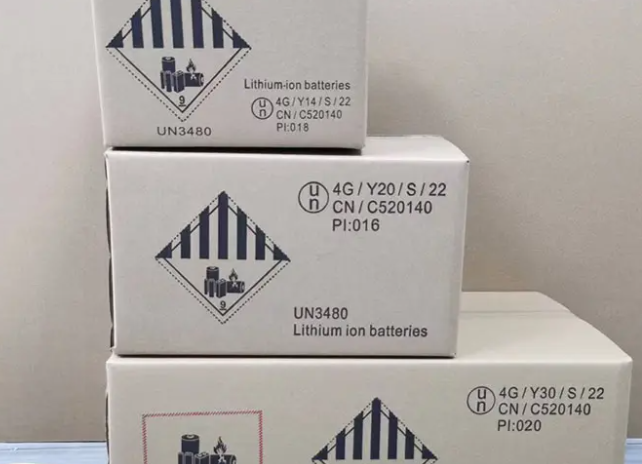
Labeling requirements differ by class: IB shipments need three hazard labels plus a shipping-marks label per battery; IA shipments in UN-approved boxes need the same labels but can omit the battery-specific label. All labels — the class-9 hazard label, aircraft-loading label, and shipping-marks label — must go on the same box face where possible (an adjacent face if space is limited). Shipping-marks labels must display the UN3480 code in text at least 12mm tall, list full street-level SHIPPER and CONSIGNEE addresses (with the shipper's address reading only "C/O Hong Kong Company" where applicable, not additional third-party care-of lines), and state net battery weight — excluding packaging — under the label "NET WEIGHT."