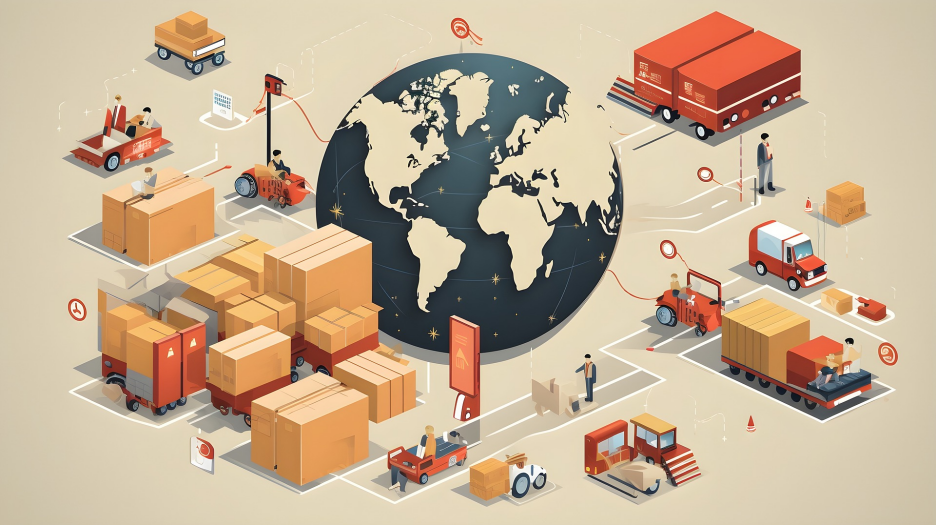
The global logistics industry's evolution from in-house operations (1960s-1980s) to third-party logistics (from ~1980) and, by the 2000s, fourth-party logistics — where providers use internal IT and integration capability to deliver full supply-chain solutions rather than just outsourced warehousing and transport — set the frame for this 2017 outlook.
Global cross-border logistics activity had grown from 18.6% of world GDP in 1980 to 24.6% by 2014, with China's share of that cross-border logistics activity rising from under 0.55% to over 3.85% of global GDP over the same period — among the fastest growth of any region. With global e-commerce transactions projected to reach $34 trillion by 2020 (2.1 billion cross-border e-commerce users) and a roughly 30% logistics cost ratio, global B2C e-commerce logistics costs were projected to rise from $5.7 trillion (2015) to $10.2 trillion by 2020.
Looking ahead, the piece projected the Asia-Pacific third-party logistics market — led by China ($27.2B) and Japan ($17.1B) in 2017, growing at 14.1% and 2.3% CAGR respectively — would outpace the slower-growing U.S. market ($39.0B, 6.4% CAGR), consistent with forecasts that Asia's economy would overtake the combined U.S. and EU economies by 2030. It also anticipated that customers would increasingly demand more specialized, value-added logistics services as supply chains grew more complex, making specialization a key competitive differentiator among logistics providers going forward.