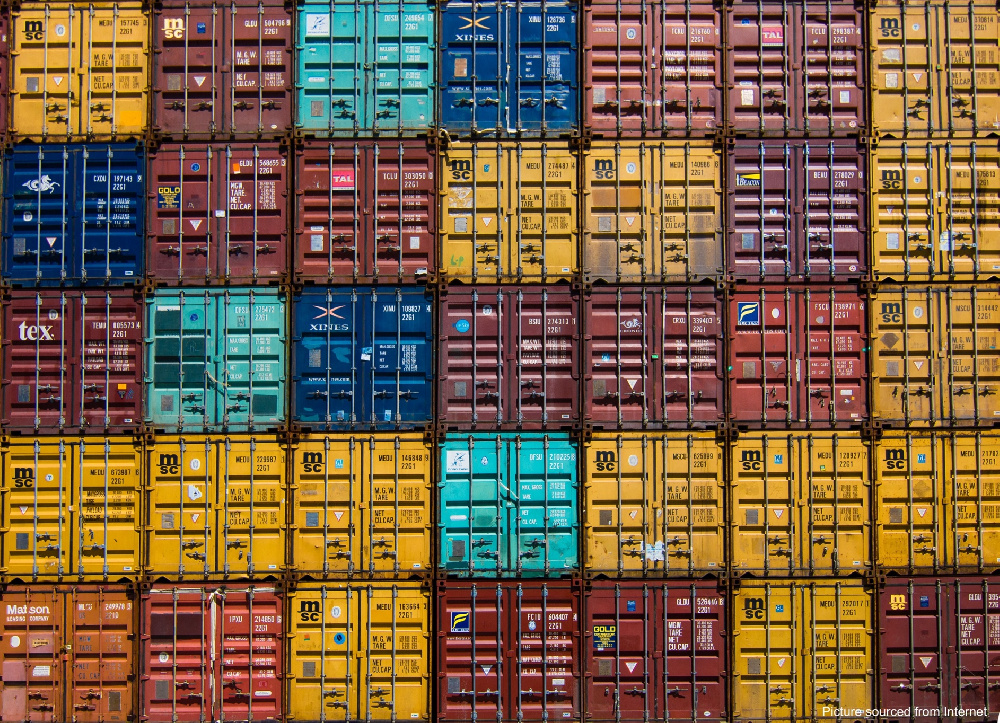
The most challenging aspect currently is for freight forwarders. In the post-pandemic era, the intense market demand has brought widespread attention to the scarcity of containers and the skyrocketing freight rates.
The ongoing fluctuations in the global COVID-19 pandemic have led to a decrease in international logistics capacity, resulting in a surge in container shipping prices. Instances of containers being overloaded and dumped have become commonplace, with mainstream media like CCTV highlighting the industry's struggle with "hard-to-find containers." These chain reactions have garnered high-level attention from regulatory authorities. In a recent statement, the Ministry of Commerce has pledged efforts to stabilize market prices.
"Global Shipping Logistics Faces 'Craziest Year' in 2020! Freight Rates Continue to Soar in Recent Periods!"
According to a December 3 report from Germany's "Der Spiegel" magazine, global shipping logistics faced a nightmarish start in 2020 due to the outbreak of the COVID-19 pandemic but has experienced an unprecedented boom towards the end of the year. The driving force behind this blockbuster year is China, the world's second-largest economy. Shipping routes between China and Europe have been extremely busy this year.
"We can hardly find containers or ships. The workload this year is so intense that it surprises us. No one foresaw such a surge in demand," expressed Rolf Jansen, CEO of Hapag-Lloyd, Germany's largest shipping company.
Container shipping prices have been climbing continuously for several weeks, and by the end of December, all container ships are fully booked. Market insiders speculate that a significant number of containers will return to China, possibly causing prices to drop, but not until January next year.
China's export container shipping market continues to operate at high levels. With stable transportation demand, most route markets are experiencing a significant rise in freight rates, driving up composite indices. Those planning to ship goods are advised to develop shipping plans as early as possible.
On European and Mediterranean routes, the traditional peak season for transportation continues to grow, maintaining a good supply-demand balance and causing a substantial increase in market freight rates.
In North American routes, overall transportation demand remains stable, with a solid supply-demand relationship, and market freight rates continue to hover at high levels.
For Persian Gulf routes, the transportation market remains stable, and some shipping companies are controlling the overall capacity to maintain a balance in the supply-demand relationship. Market freight rates are staying at recent high levels.
In the Australia-New Zealand route, transportation demand continues to grow during the traditional peak season, with a good supply-demand balance and rising market freight rates.
On the South American route, transportation demand remains high, and the supply-demand relationship is good. Market freight rates continue to rise this week.
On the Japan route, transportation remains stable this week, and market freight rates are steady.
"Why the Difficulty in Finding Containers and Surging Freight Rates?" Ministry of Commerce's Latest Statement: Efforts to Stabilize Market Prices
Currently, the significant and continuous rise in container prices and freight rates has garnered the attention of market regulators.
Addressing the issues of "container overload" and substantial freight rate increases in the foreign trade logistics sector, Gao Feng, the spokesperson for the Ministry of Commerce, stated during a press conference on December 3:
"The Ministry of Commerce, in collaboration with relevant departments, will continue to push for increased transportation capacity, support the expedited return of containers, improve operational efficiency, encourage container manufacturing companies to expand production capacity, and strengthen market supervision. Efforts will be made to stabilize market prices and provide strong logistics support for the stable development of foreign trade."
According to a report by Caixin, previously, the Chinese Ministry of Transport and the U.S. Federal Maritime Commission had announced in September that they would strengthen the control of container shipping freight rates. If shipping companies or alliances were found to be in violation of competition standards, immediate intervention would occur. Under pressure from the governments of China and the United States, major shipping companies began to resume suspended flights and vessels.
However, representatives from shipping companies denied hoarding capacity. The previous suspension was mainly due to actively reducing capacity in response to the impact of the pandemic. Now, the resumption of capacity and increased deployment are market-driven actions. Currently, additional flights have been initiated by the companies, with a 20% increase in deployment. Faced with the current container shortage situation, customers are encouraged to sign long-term contract orders.
Due to the second wave of COVID-19 outbreaks in many countries worldwide, leading to nationwide lockdowns once again, the shortage of empty containers is expected to persist. Consequently, Chinese ports are forced to deal with cancellations or delayed shipments in the face of the ongoing shortage.