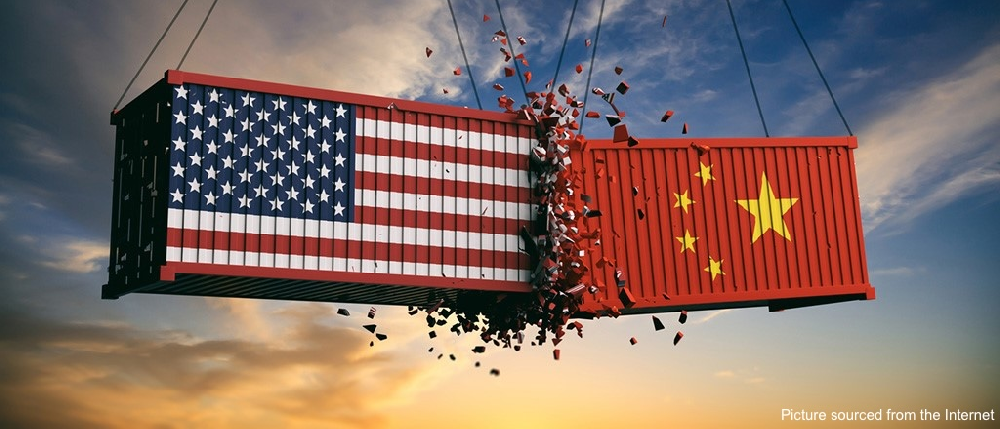
On March 8, 2018, Donald Trump announced tariffs of 25% and 10% on steel and aluminum products, respectively, marking the beginning of the China-US trade war.
On March 22, the United States Trade Representative (USTR) released the "Section 301 Investigation Report on China's Trade Practices," determining that the Chinese government's actions, policies, and practices related to technology transfer, intellectual property, and innovation were "unreasonable or discriminatory" and posed burdens or restrictions on US commerce. On March 23, in retaliation for the US tariffs on steel and aluminum products, the Chinese government announced a list of US products worth $30 billion subject to additional tariffs.
On April 4, based on the Section 301 report, the USTR announced that tariffs of 25% would be imposed on 1,333 types of Chinese goods totaling $500 billion, effective July 6. On the same day, China declared a 25% tariff increase on 106 types of US products worth $50 billion, including soybeans and Boeing aircraft.
On April 5, Trump requested the USTR to consider tariffs on an additional $100 billion worth of Chinese goods. China initiated a WTO dispute resolution procedure against the US regarding the Section 232 measures on steel and aluminum imports and the Section 301 measures.
On April 18, the US stated that it had agreed to negotiate with China under the dispute resolution mechanism regarding the imposed tariffs. On April 16, the US Department of Commerce's Bureau of Industry and Security (BIS) announced sanctions against ZTE.
On May 2, a US delegation arrived in Beijing for the first round of negotiations, making extensive demands including reducing the trade deficit, canceling subsidies for high-tech manufacturing under "Made in China 2025," removing investment restrictions, and ceasing practices related to intellectual property.
From May 15 to 19, Vice Premier Liu He led a delegation to the U.S. for the second round of negotiations, discussing measures to reduce the trade deficit and expand trade in manufacturing and services.
On May 20, U.S. Treasury Secretary Mnuchin stated that the U.S.-China trade war was "on hold." On May 25, President Trump announced that he would allow ZTE to resume business operations after security guarantees and a $1.3 billion fine.
From May 30 to June 2, a third round of negotiations took place without a joint statement. On June 15, the U.S. government announced it would proceed with a planned 25% tariff on Chinese imports starting July 6. China declared it would implement "equivalent scale and intensity" retaliatory tariffs.
On June 16, China's State Council Customs Tariff Commission announced a 25% tariff on 659 items of U.S. goods worth approximately $50 billion. On June 18, Trump announced intent to impose a further 10% tariff on an additional $200 billion of Chinese goods, threatening more if China retaliated. On June 19, China's Ministry of Commerce warned it would take comprehensive countermeasures if the U.S. proceeded.