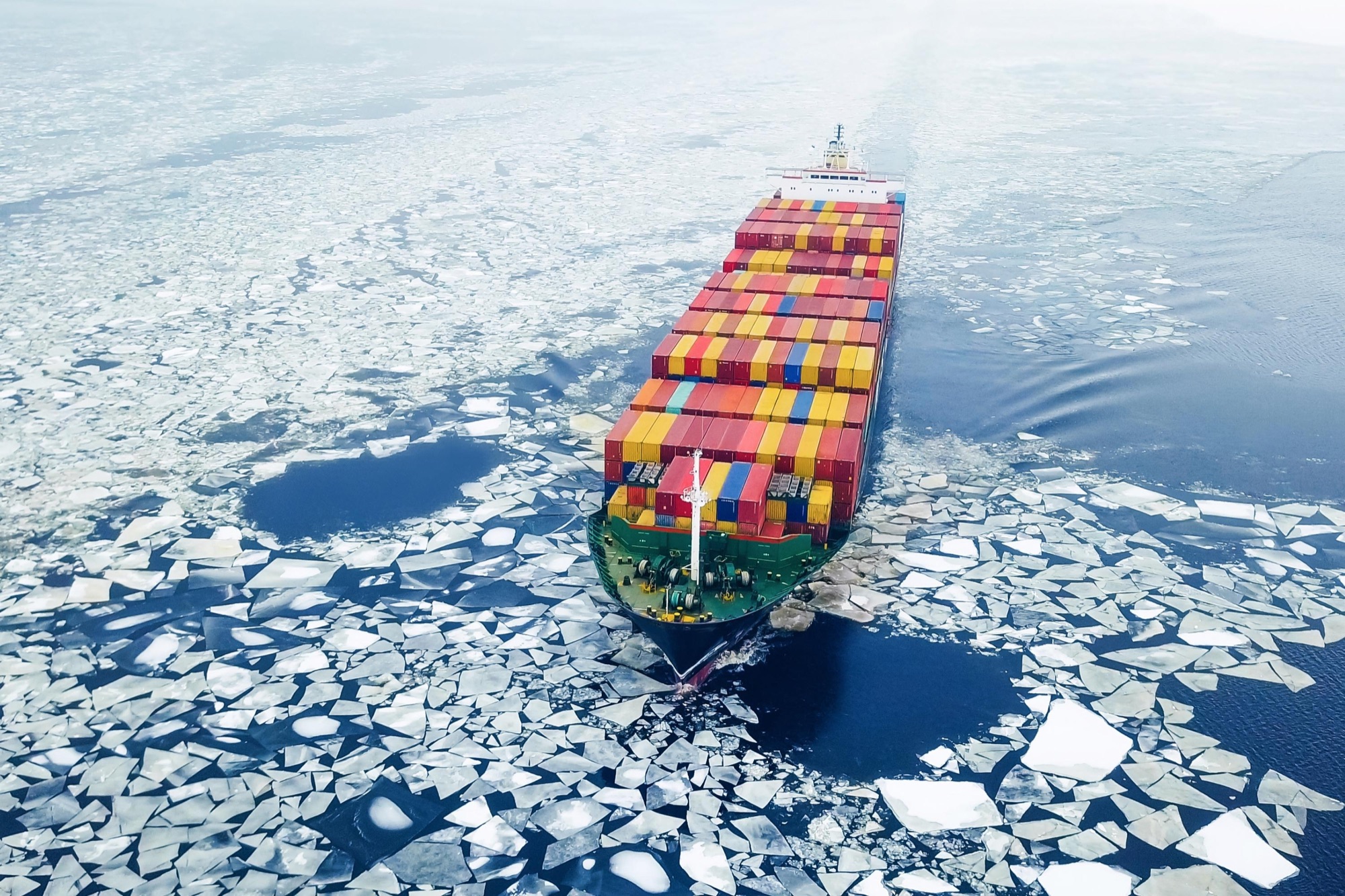
On 11 October 2026, the container ship PanStar Acro returned to Busan, South Korea, completing the first round-trip container voyage between Asia and Europe via the Arctic's Northern Sea Route (NSR). The ship left Busan on 22 August, reached Felixstowe in the UK after 21 days, then called at Rotterdam and Gdansk before sailing home. The full round trip took around 50 days.
It is a genuine milestone. It is also, for now, a trial — and the details matter more than the headline.
The appeal is distance. Sailing over the top of Russia instead of through the Suez Canal shortens the Asia–North Europe voyage considerably, and South Korean officials say the one-way trip was about 10 days faster than the conventional Suez routing. Against today's alternative — the Cape of Good Hope detour that many carriers have used since the Red Sea crisis — the gap is wider still: the Busan–Rotterdam leg was planned at around 19 days, versus roughly 40 days via the Cape.
Timing also plays a part. With Asia–Europe schedule reliability sitting around 25% this year (see our shipping reliability analysis), any credible extra routing option draws interest. South Korea is not alone: Chinese operators have run seasonal Arctic sailings since 2025, with Ningbo–Felixstowe transits advertised at around 18 days.
Geopolitics and compliance. Most of the NSR runs through Russian-controlled waters, with Russian permits and icebreaker support required. For many European cargo owners, sanctions screening, insurance terms and reputational considerations make this a harder decision than transit time alone suggests. Several of the largest global carriers have publicly committed not to use the route.
Infrastructure and safety. Ports of refuge, salvage capacity and repair facilities along the route remain limited. Insurance premiums and polar-certification requirements add cost.
Environmental scrutiny. Shipping in polar waters carries specific environmental risks, and a growing number of brands want assurance their cargo is not routed through the Arctic.
The Arctic route is not a replacement for mainstream Asia–Europe ocean services, and should not be built into supply-chain planning as one yet. But it is becoming a seasonal option worth knowing about:
For most Asia–Europe shipments today, the more practical levers remain carrier and alliance selection, realistic transit buffers, and a mix of modes — ocean, sea-air and China–Europe rail — matched to how urgent each shipment really is.