The 1929 Warsaw Convention was the foundational treaty governing international air carriers' legal obligations to passengers, shippers and consignees — establishing carrier liability for negligence, a cap on maximum compensation, and rules against carriers abusing exemption clauses to avoid liability. China ratified it in 1958. Over the following decades, a series of amending protocols (The Hague 1955, Guadalajara 1961, Guatemala City 1971, and four Montreal protocols in 1975) revised and extended it, collectively known as the Warsaw Convention documents.
As those amendments became fragmented and outdated, the International Civil Aviation Organization drafted the Montreal Convention, signed in May 1999, to consolidate and modernize the rules into a single fair, restitution-based compensation system for personal injury, baggage loss, and cargo loss in international air transport.
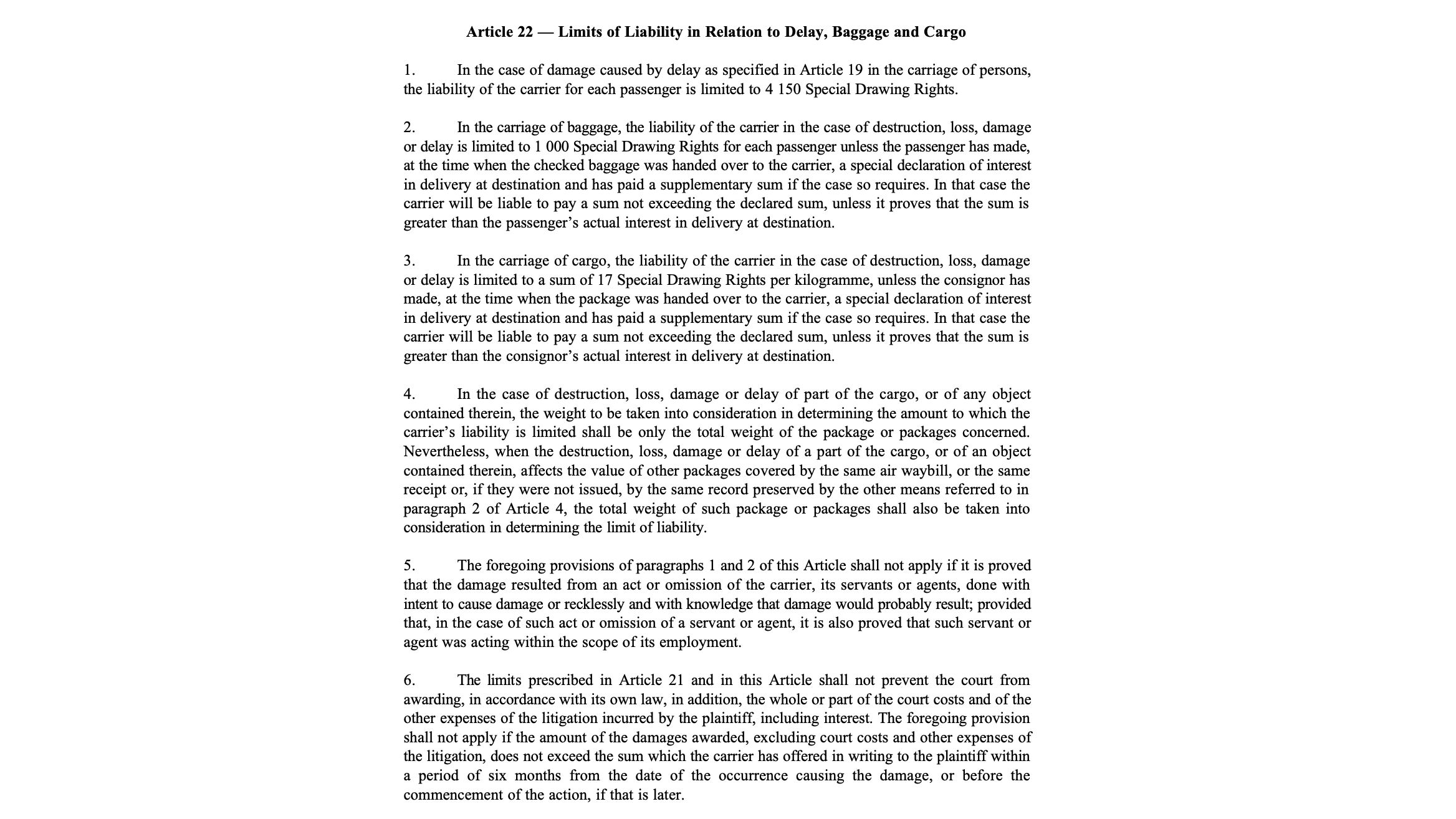
Under Articles 21-24 of the Montreal Convention, ICAO periodically reviews and adjusts the liability limits for lost cargo and baggage, expressed in Special Drawing Rights (SDRs) — the most recent revision took effect December 28, 2019. In practice, this means a shipper's compensation for lost or damaged air cargo is capped at a fixed rate per kilogram under the applicable convention, rather than the goods' full declared value, which is why cargo insurance remains important for high-value air shipments.